


Nabi
keeps the timer
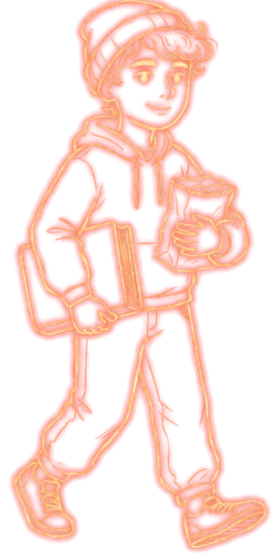
Restless and sharp. Nabi runs your Pomodoro, drills you in the technique trainer and nudges you back when you drift to your phone.
Afterhour Study is an NSW English study app: lofi, a lamp, four night-owl companions and a marker that tells you exactly how to reach the next band or grade, from Year 7 to the HSC.
no account needed:today's unseen textyour study type
the marker
Paste an essay and the question. You get a mark out of 20, your band, a mark for each criterion, comments on your own sentences and the three changes that would lift you to the next band.
Shakespeare’s King Henry IV, Part 1 (1597) presents honour as a currency that is spent, stolen and counterfeited rather than a fixed virtue.1 Written for an Elizabethan audience anxious about succession, the play stages three competing performances of honour, Hotspur’s, Falstaff’s and Hal’s, to suggest that legitimacy belongs to whoever performs it most convincingly.2
Hotspur’s honour is spectacular but self-consuming. His vow to “pluck bright honour from the pale-faced moon” shows how much he really wants honour,3 and his impatience in council is seen throughout the play.4 By contrast, Falstaff’s catechism, “What is honour? A word … Air,” reduces honour to breath, exposing the rhetoric that sends ordinary soldiers to die for it.5 Hal, who promises to “redeem time when men think least I will,” treats honour as a role he will step into when it is most useful, which proves the statement is true.6

Senior marker: the three passes agree within one mark. The evaluation is effective but not yet skilful, so the essay sits at the top of 13–16. Awarded 16/20.
“Effectively evaluates the extent to which the statement is true of their prescribed text”
A clear, original position from the first sentence, but the evaluation agrees with the statement rather than weighing it.
“Demonstrates an informed understanding of context, language, form and ideas using detailed textual references”
Strong context and one outstanding close reading (Falstaff), but two references are summarised rather than analysed.
“Composes an effective response using language appropriate to audience, purpose and form”
Controlled, formal and well structured; intensifiers (“really”, “very”) weaken an otherwise assured voice.
Example essay written for this page. Band descriptors quoted from the NESA 2021 HSC English Advanced Paper 2 marking guidelines (Section II, Module B), © NSW Education Standards Authority. Afterhour is independent of NESA.
practice papers
Paper 1 and Paper 2 for English Advanced, Standard and EAL/D, or a single section: unseen texts with short-answer questions, and essay questions on your prescribed texts. Sit them with HSC timing, custom timing or untimed, then get every answer marked.
Section I
Text 1 — Poem
Faces in the Street
They lie, the men who tell us in a loud decisive tone
That want is here a stranger, and that misery’s unknown;
For where the nearest suburb and the city proper meet
My window-sill is level with the faces in the street —
Drifting past, drifting past,
To the beat of weary feet —
While I sorrow for the owners of those faces in the street.
Henry Lawson, 1888
– 2 –
 afterhour
2026
AFTERHOUR PRACTICE EXAMINATION
English Advanced
Paper 1 — Texts and Human Experiences
General Instructions
Total marks: 40
Section I – 20 marks (pages 2–6)
Section II – 20 marks (page 7)
2026 AFTERHOUR PRACTICE EXAMINATION
English Advanced
Paper 1 — Section I Answer Booklet
Question 1 (3 marks)
How does the poet use the image of the window-sill to represent the speaker’s experience of the city?
The window-sill sits level with the passing faces, so the speaker is placed among the poor rather than above them. The repetition of “drifting past” turns the crowd into a tide of weary bodies, and the speaker’s sorrow becomes a quiet act of witness against those who deny that want exists.
Question 2 (4 marks)
Office Use Only – Do NOT write anything, or make any marks below this line.
meet the night shift
Each one looks after a part of your study night. Keep scrolling to meet them.
keeps the timer
Restless and sharp. Nabi runs your Pomodoro, drills you in the technique trainer and nudges you back when you drift to your phone.

marks your essays
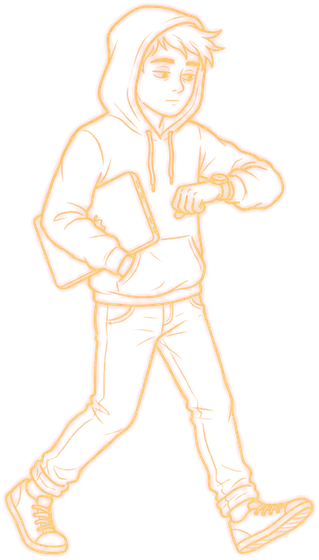
Precise and a little stern. Bami marks your essays, exam answers and the daily unseen against the marking guidelines, and tells you what lifts you a band.

builds your papers
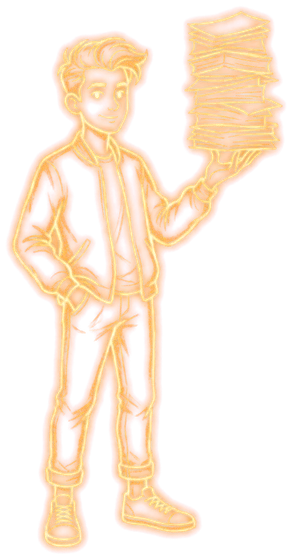
Sleepy but steady. Dungi sets your practice papers at your year's standard, runs the exam room and keeps your streak.

keeps you calm
Unbothered, always. Chaba shows you around on day one, then puts the lofi on and keeps you in deep focus when the exam feels close.
study rooms
A lofi room, a Pomodoro timer and companions to keep you company. Start a room, send the invite link, and see who's studying right now.

 MiaModule A essay48m
 Jaytechnique trainer31m
 Priyapractice paper 172m
 Tomon a break5m
journey and insights
Every focused session, marked essay and trainer round earns XP on a neon city map. Insights show your study hours, streaks and how your marks are moving, criterion by criterion.

a little every night
Learn to name, spot and explain language techniques in short rounds, with spaced review so the ones you miss come back. Free-text answers are checked the way a marker would.
One unseen text and a 3-mark question a day, the same for everyone in NSW, marked in seconds with a streak to keep. No account needed.
try today's unseen textFeedback your child would otherwise wait a week for, marked against NESA's published guidelines. Pro can be paid from a link they send you.
what parents should knowpricing
prices in australian dollars. cancel any time.
A$0
A$25/ month
or A$200 / year, or the A$99 HSC Pass in your HSC year
Afterhour Study (afterhour.study, or just Afterhour) is an independent study app for NSW high school English, Years 7 to 12. It marks essays against NESA's published marking guidelines, sets practice exams pitched to your year, trains techniques and writing, and has study rooms for working with friends. It's free to start.
They stay yours. They're stored to give you feedback and history, never published or sold, and you can delete your account and everything in it from settings.
No. Afterhour is an independent study app. It uses NESA's publicly available syllabus, marking guidelines and exam specifications as its reference.
No. Years 7 to 10 get A–E grades and a mark out of 20 on analytical, imaginative, persuasive, discursive and informative writing, judged at their year's standard, with school-style practice exams. Year 11 is marked against the Year 11 focus areas for Advanced, Standard and EAL/D. Year 12 gets the full HSC: NESA bands, modules and HSC-shaped papers.
Afterhour is free to use with 1 essay mark a week (the mark, the grade or band and the top 3 comments, with your first essay marked in full), 1 practice paper a month and 15 trainer sessions a week. Afterhour Pro is A$25 a month or A$200 a year in Australian dollars, and you can cancel any time. From April of your HSC year there's also the HSC Pass: A$99 once for Pro until the end of your exams. Parents can pay from a link you send them.
It marks against NESA's published marking guidelines for the specific task, using several independent passes and a moderation step, and it shows its reasoning with quotes from your essay. It's a strong practice signal, not an official result: your teacher's and NESA's marks are the ones that count.
NSW HSC English Advanced, English Standard and English EAL/D (Common Module, Modules A, B and C, including imaginative, discursive, persuasive and reflective writing), plus English Extension 1.
No. They're new papers written in the same structure, question styles and timing as the HSC, using your prescribed texts and public-domain unseen texts, and they're marked the same way as essays.

11:00 pm · ParramattaA Module A essay, second draft.
12:00 am · HornsbyPaper 1, untimed. Nearly done.
1:00 am · CronullaTwelve nights in a row.
2:00 am · everywhereAnd half of NSW is still writing.
made in sydney, for every English student in NSW, Year 7 to the HSC.